top of page
A Curious Collection
Welcome to a collection of art and culture notes
Writers, artists, books, ideas, places, music, history, discoveries, and the occasional odd thing that is simply worth knowing about. There is no particular order and no attempt to cover everything. Some subjects are well known; others are not. Some have been around for centuries, while others are much more recent. The only real connection is that they caught my attention and seemed worth sharing. You may already know some of them. You may have forgotten others. And some may be completely new. Have a look around and see what you find.
You are visiting a site by Ardan Michael Blum


Voltaire
Early Life and Education Voltaire, born François-Marie Arouet in Paris on November 21, 1694, was one of the most consequential writers of the European Enlightenment. He did not construct a comprehensive philosophical system. Instead, he wrote across drama, poetry, history, philosophical fiction, essays, pamphlets, scientific writing, dictionary articles, and correspondence. His characteristic method was to make abstract questions concrete through irony, satire, historical ex


Sandro Botticelli
Sandro Botticelli was one of the most distinctive painters of the Italian Renaissance. Born Alessandro di Mariano di Vanni Filipepi in Florence around 1445, he became famous for graceful figures, flowing contours, windblown drapery, and faces poised between earthly beauty and private melancholy. Primavera and The Birth of Venus are now among the most recognizable paintings in Western art, but his career also encompassed altarpieces, devotional images, portraits, frescoes, and


John Ronald Reuel Tolkien
J.R.R. Tolkien — John Ronald Reuel Tolkien — was an English writer, philologist, and teacher whose fiction transformed modern fantasy. He was born in Bloemfontein, in the independent Orange Free State, now part of South Africa, on January 3, 1892. CHILDHOOD, FAITH, AND LANGUAGE Tolkien came to England with his mother and brother at three and remained after his father died the following year. His mother died when he was twelve, and the Catholic priest Francis Xavier Morgan bec


Rembrandt
Rembrandt Harmenszoon van Rijn was one of the defining artists of the Dutch Golden Age and one of Europe’s most influential painters and printmakers. Born in Leiden on July 15, 1606, he made light, gesture, texture, and expression carry exceptional narrative and emotional force. The son of a prosperous miller, Rembrandt briefly enrolled at Leiden University before choosing art. He trained with Jacob van Swanenburg in Leiden and then for about six months with the history paint


Pablo Picasso
Pablo Ruiz Picasso was born on October 25, 1881, in Málaga, Spain. During a career of more than seventy years, he became one of the most influential artists of the twentieth century. His vast body of work included painting, sculpture, drawing, printmaking, collage, ceramics, and theater design. Rather than follow one stable style, he repeatedly reworked tradition and invented new ways of organizing figures, objects, and pictorial space. His father, José Ruiz Blasco, was a pai


Confucius
Confucius, conventionally dated 551–479 BCE, was a teacher and political thinker whose legacy became central to East Asian moral and intellectual history. His family name was Kong and his personal name Qiu; his courtesy name was Zhongni. Kongzi and Kong Fuzi mean “Master Kong.” “Confucius” is the Latinized form through which he became known in Europe. He is traditionally said to have been born in Zou, a district of Lu near present-day Qufu, Shandong, during China’s Spring and


Amazing TV & Movies
This page brings together feature films and television films from different countries, periods, and genres. The selections are personal rather than ranked. Each entry briefly explains what the work is, what it examines, and why it remains worth watching. These selections span a wide range of ages and subject matter. Some are unrated in the United States, and television programs use a different rating system. Before viewing, check the current rating for the specific release an


Landmarks In Chess History
Ten Essential Games Anderssen–Kieseritzky, 1851 — The “Immortal Game”: an archetypal Romantic-era combination in which Anderssen sacrificed a bishop, both rooks, and his queen before delivering checkmate. Morphy–Duke Karl of Brunswick and Count Isouard, 1858 — The “Opera Game”: a model demonstration of rapid development, open lines, and an attack against a king trapped in the centre. Capablanca–Tartakower, 1924 — Capablanca activates his rook and king to convert an extra pawn


Maria Montessori
Maria Montessori was an Italian physician and educator who transformed ideas about childhood and learning. Born in Chiaravalle, Italy, on August 31, 1870, she studied mathematics and natural sciences before entering medicine at the University of Rome. In 1896 she received her medical degree, becoming one of Italy’s earliest women physicians. Montessori’s medical training taught her to observe closely and treat each child as an individual. At the University of Rome’s psychiatr


Andy Warhol
Andy Warhol was born Andrew Warhola on August 6, 1928, in Pittsburgh, Pennsylvania. The youngest of three sons, he grew up in a working-class Carpatho-Rusyn immigrant family that practiced Byzantine Catholicism. He studied pictorial design at the Carnegie Institute of Technology, now Carnegie Mellon University, graduated in 1949, and moved to New York. During the 1950s he became a successful commercial illustrator. Rather than abandoning advertising when he turned to Pop Art,


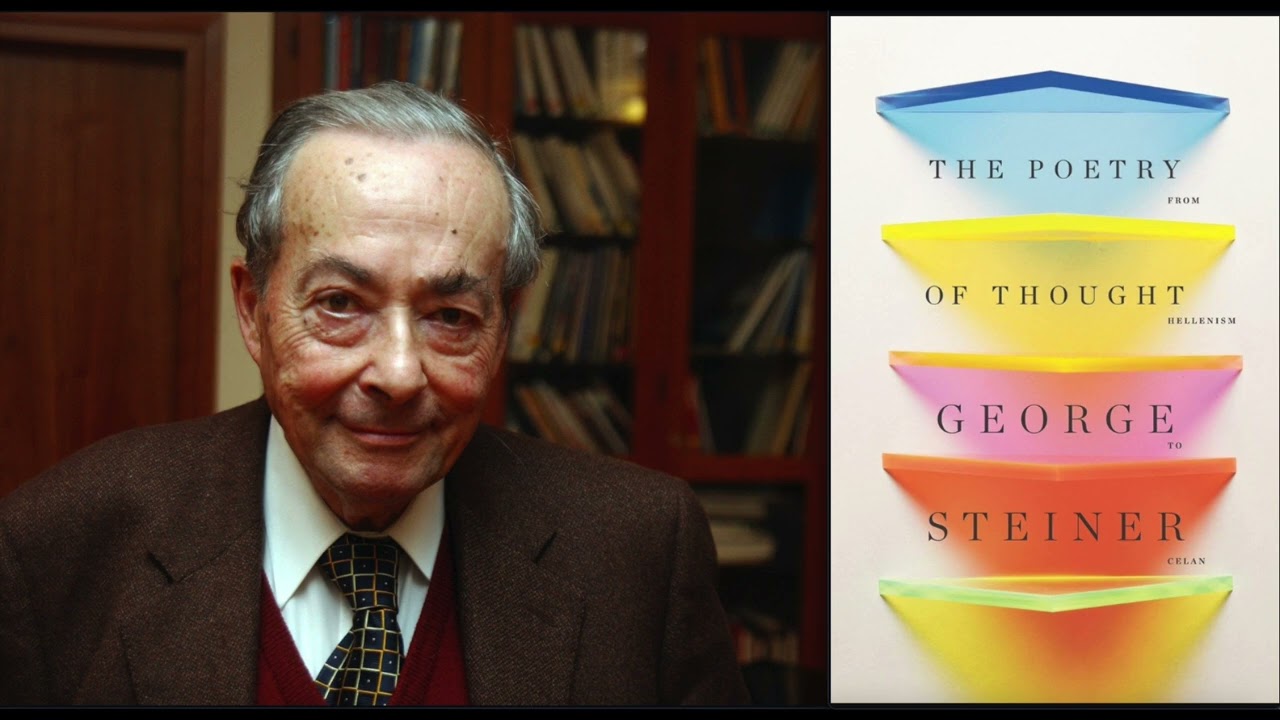
George Steiner
George Steiner was a literary critic, essayist, teacher, fiction writer, and one of the most ambitious comparative thinkers of the twentieth century. Francis George Steiner was born on April 23, 1929, in Neuilly-sur-Seine, outside Paris, to Viennese Jewish parents. In 1940, as German forces invaded France, his family escaped to New York. Most of the Jewish pupils he left behind at school were murdered in the Holocaust. This history shaped his central question: how could Europ


Alfred Hitchcock
Alfred Joseph Hitchcock was one of cinema’s most influential directors. Born in Leytonstone, on the eastern edge of London, on August 13, 1899, he directed more than fifty features across six decades. Through visual storytelling, restricted points of view, dark humor, and precise control of information, he helped shape the modern thriller. Raised Roman Catholic and educated by Jesuits, Hitchcock later associated religious discipline with fear. Critics often relate that backgr


Michel de Montaigne
Michel Eyquem de Montaigne was born on February 28, 1533, at his family estate in Périgord, southwestern France, and died there on September 13, 1592. A French essayist, philosopher, magistrate, and public official, he is usually credited with establishing the modern personal essay. His Essais gave the form its name and made the changing self—its memories, habits, judgments, fears, and contradictions—a serious subject of literature and philosophy. Montaigne came from a prospe


Giotto
Giotto di Bondone was one of the decisive artists of late medieval Italy and a major influence on Renaissance painting. He was probably born around 1265–1267, in Florence or its surrounding territory. Tradition places his birth at Vespignano in the Mugello, but the evidence is uncertain. He died in Florence on January 8, 1337. Giotto’s importance lies not simply in making religious art “more realistic,” but in giving sacred narrative greater bodily presence, psychological for


Geoffrey Chaucer
Geoffrey Chaucer, born in London in the early 1340s and traditionally said to have died on October 25, 1400, was a poet, courtier, diplomat, and royal administrator. He is often called the “Father of English Poetry” or the “Father of English Literature,” but these are later honorifics, not literal history. English literature existed long before him. Chaucer’s achievement was to expand its literary range and prestige to an extraordinary degree. He was the son of John Chaucer,


Leonardo da Vinci
Leonardo da Vinci was one of the most extraordinary figures of the Italian Renaissance. Born Leonardo di ser Piero da Vinci on April 15, 1452, in or near Vinci, in Florentine territory, he became a painter, draftsman, engineer, anatomist, and investigator of nature. “Da Vinci” means “from Vinci.” Drawing united his many activities: it allowed him to study how things worked and make thought visible. FLORENCE AND MILAN Leonardo spent his early years around Vinci and was trainin


Michelangelo
Michelangelo Buonarroti was one of the defining artists of the Italian Renaissance. Born Michelangelo di Lodovico Buonarroti Simoni in Caprese on March 6, 1475, he worked as a sculptor, painter, architect, and poet. Contemporaries called him “Il Divino”—the divine one—yet despite his mastery of several arts, Michelangelo regarded himself first as a sculptor. FLORENCE AND THE MAKING OF AN ARTIST His family returned to Florence soon after his birth, and he spent part of his chi


John Keats
John Keats was born in London on October 31, 1795, and died in Rome on February 23, 1821. He was twenty-five. His surviving poetry spans roughly six years; his public career lasted less than five. Keats is usually placed with Byron and Shelley in the second generation of English Romantic poets. Romanticism, however, was not a single creed. Its writers disagreed about politics, religion, nature, and the purpose of art. Keats's poems are sensuous but formally controlled. They a


Molière
Jean Poquelin (later known as Jean-Baptiste Poquelin) was baptized at Saint-Eustache in Paris on January 15, 1622; his exact birth date is not recorded. Under the stage name Molière, he became one of the greatest comic playwrights in European history. Through humor, satire, and an unsparing eye for human behavior, he exposed vanity, hypocrisy, greed, self-deception, and social pretension. Molière came from a prosperous Parisian family. His father held the office of tapissier-


Virgil
Publius Vergilius Maro, conventionally known in English as Virgil or Vergil, was one of the greatest poets of ancient Rome. According to ancient biographical tradition, he was born on October 15, 70 BCE, at Andes near Mantua, in Cisalpine Gaul—now northern Italy. The precise location of Andes is unknown. Because most details of his early life come from biographies written centuries later, they must be treated with caution. Ancient accounts trace Virgil’s education through Cre


Socrates
Socrates (c. 470–399 BCE) lived through both the power and the upheavals of classical Athens. He witnessed the age of Pericles, the long Peloponnesian War, defeat by Sparta, the violent rule of the Thirty, and the restoration of democracy. He left no philosophical writings, yet became one of the foundational figures of Western philosophy. Socrates did not invent ethical inquiry: earlier poets, thinkers, and the Sophists had also debated virtue and human conduct. What distingu


William Shakespeare
William Shakespeare was an English playwright, poet, actor, and shareholder in a theatrical company. He was born in Stratford-upon-Avon in 1564 and died there in 1616. His exact birthday is unknown: April 23 is the traditional date, while the surviving parish record shows that he was baptized on April 26. Shakespeare grew up in a market town in the English Midlands. His father, John Shakespeare, was a glover, businessman, and civic official; his mother, Mary Arden, came from


Carl Gustav Jung
Carl Gustav Jung was a Swiss psychiatrist, the founder of analytical psychology, and one of the most influential — and disputed — figures in modern psychology. He was born in Kesswil, Switzerland, on July 26, 1875, and died in Küsnacht on June 6, 1961. EARLY CAREER AND COMPLEXES Jung studied medicine at the University of Basel and joined Zürich's Burghölzli psychiatric hospital in 1900 under Eugen Bleuler. He did not invent word-association testing, but used delayed, repeated


Mahatma Gandhi
Mohandas Karamchand Gandhi was born on October 2, 1869, in Porbandar, western India, and was assassinated in New Delhi on January 30, 1948. “Mahatma,” meaning “great soul,” was an honorific, not his birth name. He became a central leader of India’s struggle against British rule and a global symbol of nonviolent resistance. Raised in a Hindu family in Gujarat, Gandhi entered an arranged child marriage with Kasturba Makhanji in 1883; they had four surviving sons. She later join
bottom of page